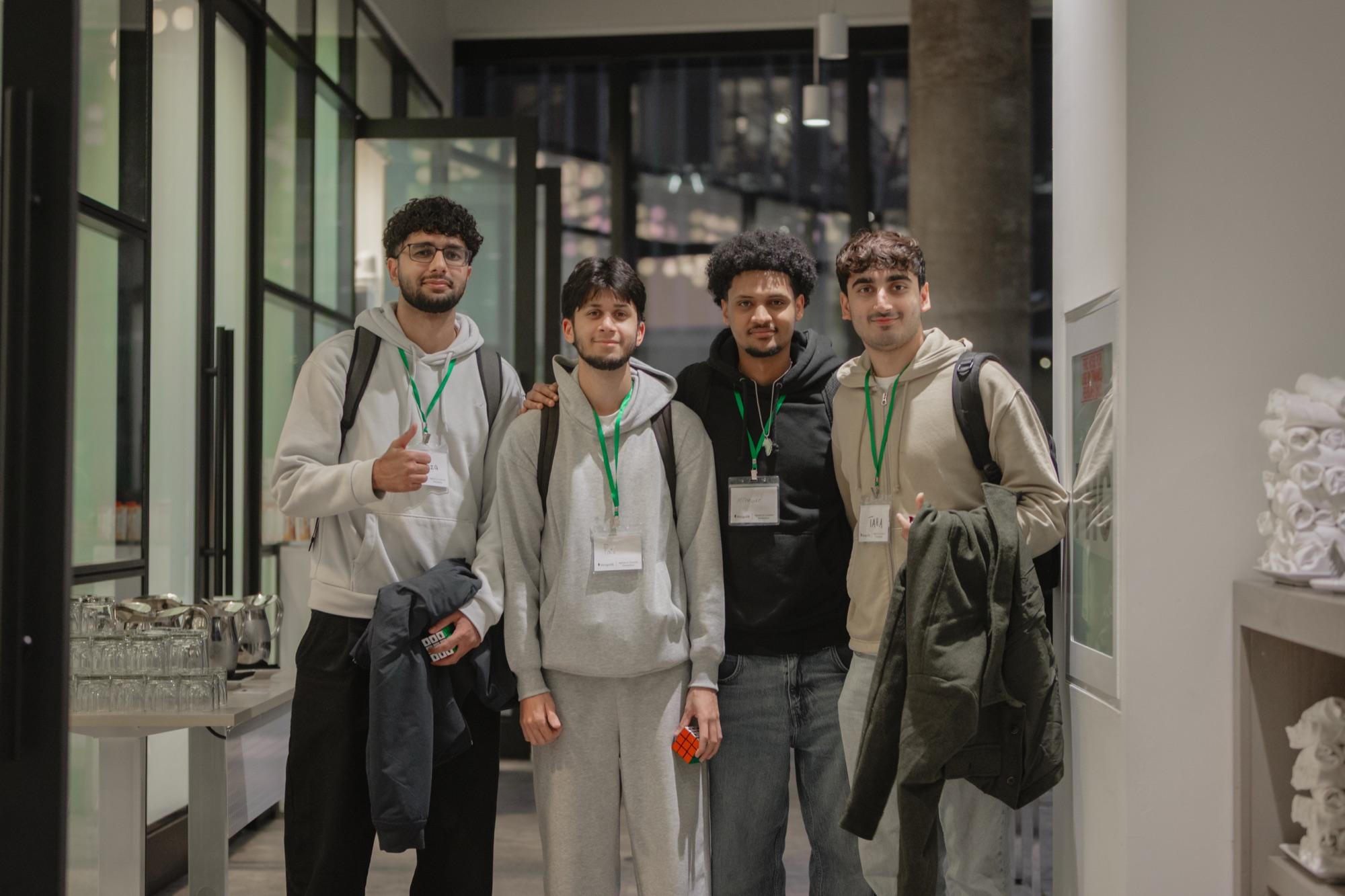
on november 14 i spent the whole day at agents in context toronto, a one-day hackathon run by mongodb and cerebral valley. it went from 9 am to 9 pm at the quay on queens quay, right by the lake.
my team was taha mohyuddin, hamza memon and mohamed salih. we called ourselves all green, like a dashboard where every check passes.
- event
- agents in context toronto, a mongodb hackathon, one day
- track
- problem statement 3: finish the job
- team
- faiz mustansar, taha mohyuddin, hamza memon, mohamed salih
- links
- github, live dashboard, event page
- stack
- python, fastapi, next.js, mongodb atlas, atlas vector search, openai, github actions
the problem
when a website breaks, someone has to drop what they are doing, figure out what went wrong, find the bad code, fix it and ship the fix. that takes time, and it usually happens at a bad time.
the theme of the day was AI agents that remember things. our track, finish the job, was about agents that keep going until the work is actually done, even if something crashes halfway through.
what we built
we built OpsRelay. it watches your apps, and when one breaks, it sends an AI agent to look into it.
here is what happens when something goes wrong:
- OpsRelay notices the app is down or a test failed, and opens an incident on the dashboard.
- the agent gathers clues: which check failed, what code changed recently, and what the logs say.
- it searches MongoDB for similar problems we fixed before, so it does not start from zero.
- it writes a fix and runs the app's tests to make sure the fix works.
- if the tests pass, it opens a pull request on GitHub. a person reviews it and decides to merge. the agent never merges on its own.
to show it working, taha built two small demo apps: NovaMart, an online shop, and NovaConnect, a messaging app. then we broke them on purpose. a checkout that charged the wrong total, product images that stopped loading, messages that would not send. the agent had to find and fix each one.
how mongodb helped
the hardest part of an agent is not the fixing. it is not losing its place.
if the agent crashes in the middle of a fix, you do not want it to start over, and you really do not want it to open the same pull request twice. so every step the agent finishes gets saved in MongoDB Atlas. when it starts again, it reads where it left off and picks up from there.
before it opens a pull request, it saves a note saying "i am about to open this PR." after, it checks GitHub to make sure the PR really exists before marking the step as done.
we also used Atlas Vector Search as the agent's memory. every fixed incident gets saved, and the next time something similar breaks, the agent looks up how we fixed it last time.
how we split the work
with only 12 hours, everyone owned one piece:
- taha built the two demo apps and the first uptime monitor.
- hamza built the part that watches GitHub for failed runs and the part that opens pull requests.
- mohamed built the MongoDB layer: saving each step, recovering after a crash, live health checks every 30 seconds, and a small system that learns which kind of fix works best.
- i built the diagnosis and repair agent, the dashboard, and the buttons that break the demo apps on cue.
we merged our pieces through pull requests all day. by the end of the day the repo had over 25 of them.
the best moment
around 4 pm the agent opened its first real fix. the shop's checkout was showing the wrong price because it forgot to multiply by quantity. the agent found the bug, wrote the fix, ran the tests and opened a pull request. i reviewed it and merged it. about half an hour later it did it again for the broken product images.
watching it fix a bug we planted, with nobody touching the code, was really cool.
demo and results
we submitted just before 5 pm and recorded a one minute demo video right after. then came judging.
we did not place, but for a 12 hour build, a lot of it actually worked end to end.
after the hackathon
i kept building OpsRelay after the event. the hackathon gave us a temporary MongoDB cluster that was deleted on november 24, so one of the first things i did was add a way to move the data to a new database.
since then it has become a real app:
- anyone can sign in, add their own websites, and OpsRelay checks them every five minutes.
- it can send alerts to Slack, Discord or PagerDuty.
- it can open incidents from Sentry, Vercel, Better Stack and Dependabot.
- the demo shop and messaging apps are gone. the agent now works on any repository you connect.
the dashboard is live at opsrelay-dashboard.vercel.app and the code is open source on github.
what i learned
- save progress after every step. an agent that can crash and pick up where it left off is worth more than a smart agent that has to start over.
- keep a person in charge. the agent proposes fixes and proves they pass the tests, but a human always clicks merge.
- split work early. four people on one repo for 12 hours only worked because we each owned a clear piece from the start.
thanks to mongodb and cerebral valley for running the event, and to taha, hamza and mohamed for a great day.